
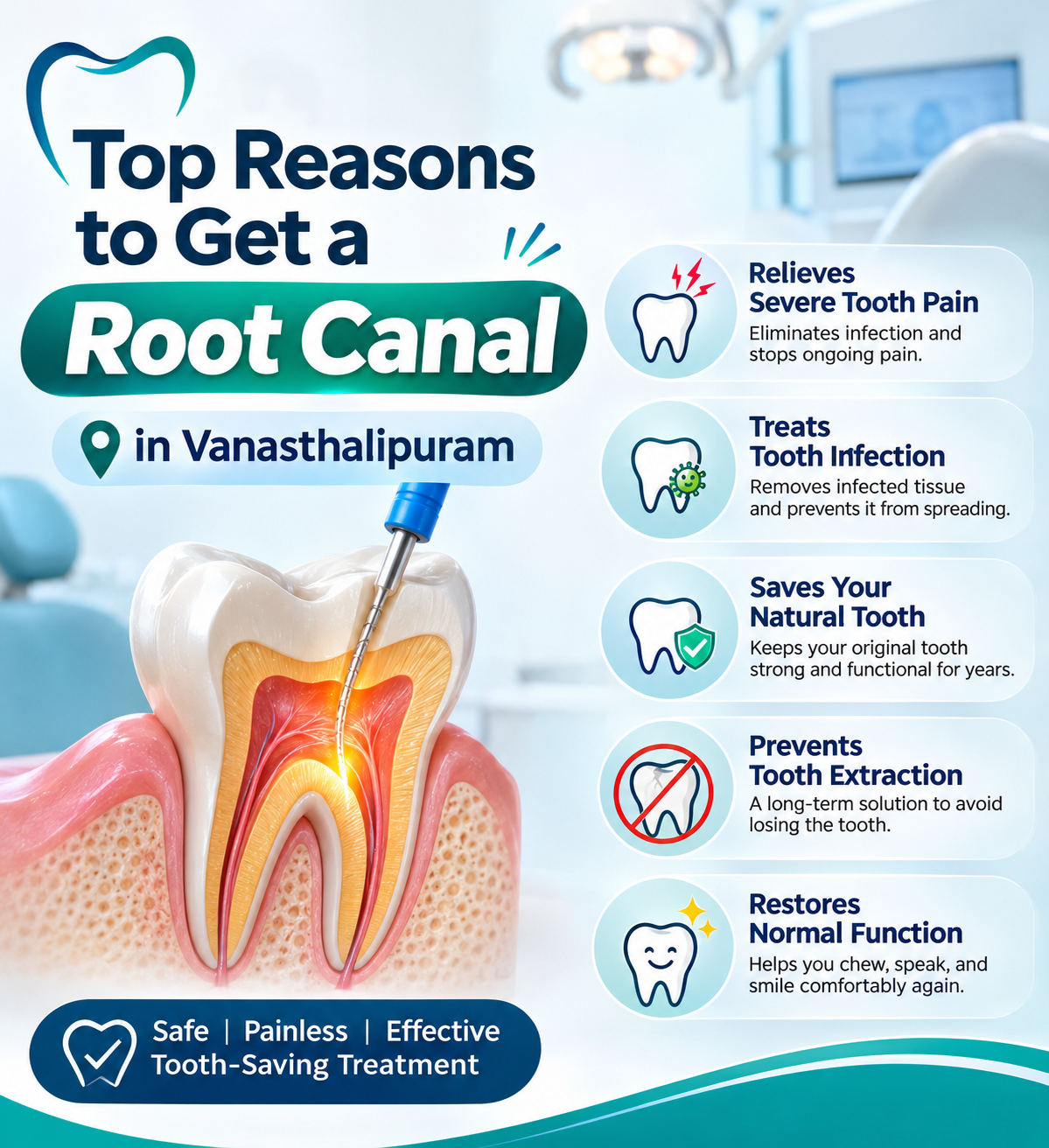
Top Reasons to Get a Root Canal in Vanasthalipuram Dental health plays an important role in maintaining overall health and well-being. However, many people ignore tooth pain, sensitivity, or swelling until the problem becomes severe. One of the most effective dental procedures for saving a badly damaged or infected tooth is Root Canal Treatment (RCT). If you are experiencing persistent tooth pain or discomfort, understanding the Top Reasons to Get a Root Canal in Vanasthalipuram can help you make the right decision about your dental health. Root canal treatment removes infected pulp from inside the tooth, cleans and disinfects the root canals, and seals the tooth to prevent further infection. If you are searching for reliable root canal treatment in Vanasthalipuram, consulting an experienced dentist at Dr. Meena’s Advanced Dental Clinic can help you understand the available treatment options. 1. Persistent and Severe Tooth Pain One of the most common reasons to get a root canal is continuous or severe tooth pain. When bacteria enter the inner pulp of a tooth, they can cause inflammation and infection. You may experience: Constant or throbbing tooth pain. Pain while chewing or biting. Toothache that disturbs your sleep. Pain that spreads towards the jaw or ear. Increased discomfort when pressure is applied. Ignoring persistent tooth pain can allow the infection to spread. A dentist can examine the affected tooth and recommend root canal treatment when necessary. 2. Prolonged Sensitivity to Hot and Cold Foods Do you experience sharp pain when drinking hot tea, coffee, or cold beverages? Temporary sensitivity can occur for several reasons, but prolonged sensitivity may indicate damage or infection inside the tooth. If the pain continues even after removing the hot or cold stimulus, it may suggest inflammation of the dental pulp. A dental examination can identify the underlying cause and determine whether root canal treatment is required. 3. Deep Tooth Decay or Cavities Untreated cavities are another major reason people need root canal treatment. Tooth decay begins by damaging the outer enamel and can gradually progress through the dentin into the inner pulp. When bacteria reach the pulp, the tooth may become infected and painful. Early-stage cavities can often be treated with dental fillings. However, when decay reaches the pulp, root canal treatment may be necessary to remove the infection and save the natural tooth. Regular dental check-ups help detect cavities before they become serious. 4. Swelling Around the Gums Swelling near an infected tooth should never be ignored. Sometimes, a bacterial infection can lead to a dental abscess, which is a collection of pus around the tooth or its root. Common symptoms include: Swollen or tender gums. Pain while chewing. Pus formation near the affected tooth. Bad taste or unpleasant mouth odour. Facial swelling in severe cases. A dental abscess requires prompt professional attention. Depending on the condition, the dentist may recommend root canal treatment along with appropriate infection management. 5. Darkening or Discolouration of a Tooth Have you noticed that one of your teeth has become darker or grey compared with the surrounding teeth? Tooth discolouration can sometimes indicate damage to the internal pulp, particularly following an injury or trauma. Although not every discoloured tooth requires root canal treatment, a dental examination can help identify whether the pulp has been damaged or become infected. Early diagnosis can help prevent further complications. 6. Tooth Damage Due to Accidents or Injuries Accidents, sports injuries, and falls can damage teeth. Even if a tooth does not break completely, an impact can injure the dental pulp. Symptoms may not appear immediately. Some patients develop pain, sensitivity, or discolouration days or weeks after an injury. A dentist can assess the damage using clinical examination and dental X-rays. If the pulp is irreversibly damaged or infected, root canal treatment may help preserve the natural tooth. 7. To Save Your Natural Tooth One of the biggest advantages of root canal treatment is that it helps save your natural tooth. In the past, extraction was sometimes considered when a tooth became severely infected. However, root canal treatment offers an opportunity to retain the natural tooth when it is restorable. Benefits include: Preserving your natural smile. Maintaining normal chewing function. Avoiding unnecessary tooth extraction. Preventing neighbouring teeth from shifting into the empty space. Supporting long-term oral health. After root canal treatment, the dentist may recommend a dental crown to protect the treated tooth, depending on its condition. 8. To Prevent the Spread of Dental Infection An untreated tooth infection can spread beyond the affected tooth and cause serious complications. Infections may involve surrounding gum tissues, jaw structures, and facial spaces. In severe cases, they can lead to systemic complications. Root canal treatment helps remove infected pulp tissue, disinfect the root canal system, and seal the tooth. If you experience severe pain, facial swelling, fever, or difficulty swallowing or breathing, seek urgent medical or dental care. Why Choose Professional Root Canal Treatment in Vanasthalipuram? Choosing the right dental clinic is important for effective treatment and long-term results. At Dr. Meena’s Advanced Dental Clinic, Vanasthalipuram, patients can receive professional dental evaluation and treatment recommendations based on their individual oral health needs. When choosing a dental clinic, consider: Experienced dental professionals. Proper diagnosis and digital dental X-rays. Modern dental equipment and sterilisation practices. Clear explanations of treatment procedures. Appropriate follow-up care. Personalised treatment planning. The dentist will evaluate your tooth condition and explain whether root canal treatment is the right solution. What Happens During Root Canal Treatment? Root canal treatment generally involves the following steps: Step 1: Dental Examination The dentist examines the affected tooth and may take an X-ray to understand the extent of infection. Step 2: Local Anaesthesia Local anaesthesia is administered to make the procedure comfortable. Step 3: Removal of Infected Pulp The infected or damaged pulp tissue is carefully removed from inside the tooth. Step 4: Cleaning and Disinfection The root canals are cleaned, shaped, and disinfected to remove bacteria and debris. Step 5: Filling and Sealing The cleaned canals are filled with a
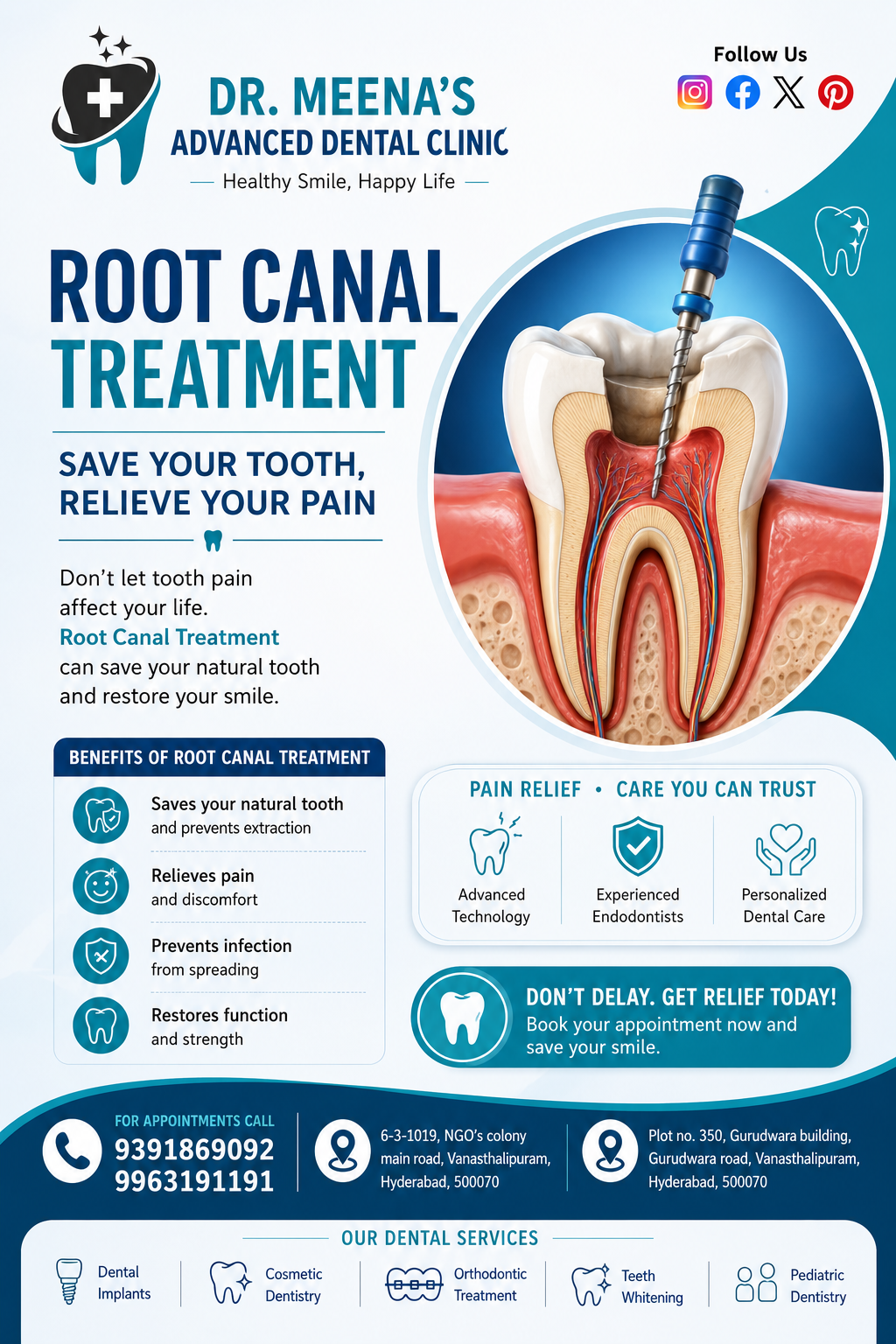
Dental Clinic In Vanasthalipuram For Root Canal Treatment
It can be convenient to choose a clinic that provides comprehensive dental services, including diagnosis, root canal treatment, restorative procedures, crowns, and preventive dental care. What Happens During Root Canal Treatment? The exact treatment process depends on the individual tooth, but a typical root canal procedure involves several steps. 1. Dental Examination The dentist examines the tooth and discusses your symptoms. An X-ray may be taken to understand the condition of the tooth and its roots. 2. Local Anaesthesia Local anaesthesia is generally used to numb the area around the tooth so that the procedure can be performed comfortably. 3. Cleaning the Root Canals The dentist accesses the inside of the tooth and removes the infected or inflamed pulp. The root canals are then cleaned and shaped. 4. Sealing the Tooth After the canals have been properly cleaned, they are filled and sealed to help prevent further infection. 5. Tooth Restoration Depending on the condition and location of the tooth, a filling or dental crown may be recommended to restore strength and function. Is Root Canal Treatment Painful? Modern dental techniques and local anaesthesia are designed to make root canal treatment much more comfortable than many people expect. Some tenderness or sensitivity can occur after treatment, but it is usually temporary. If you are worried about dental pain or treatment, discuss your concerns with your dentist before the procedure. Understanding what will happen can make the experience less stressful. How Long Does Root Canal Treatment Take? The time required for root canal treatment varies depending on factors such as the type of tooth, the number of canals, the severity of infection, and the complexity of the case. Some cases can be completed in fewer appointments, while more complicated cases may require additional visits. Your dentist can provide a more accurate treatment plan after examining your tooth. Benefits of Root Canal Treatment One of the major benefits of RCT is that it can help preserve the natural tooth. Potential benefits include: Helps eliminate infection inside the tooth Can relieve dental pain caused by pulp inflammation or infection Helps preserve the natural tooth Restores chewing function after proper restoration Can avoid extraction in suitable cases Root Canal Treatment vs. Tooth Extraction When a tooth is severely damaged or infected, patients may wonder whether extraction is better than root canal treatment. Whenever a tooth can be predictably restored, preserving the natural tooth may be preferable. However, extraction may be necessary in some situations when the tooth cannot be adequately restored. The best option depends on your individual dental condition. A dentist can explain the advantages and limitations of each treatment after examination. Why Timely Dental Treatment Matters Ignoring persistent tooth pain does not necessarily mean the problem will resolve on its own. Dental infections can progress and may lead to swelling or other complications. If you have ongoing tooth pain, sensitivity, or swelling, schedule a dental examination rather than delaying treatment. Looking for the Best Dentist for Root Canal Treatment in Vanasthalipuram? If you are searching for a best dentist for root canal treatment in Vanasthalipuram, focus on factors such as professional experience, diagnosis, treatment planning, technology, infection-control practices, patient communication, and follow-up care. A consultation allows the dentist to determine whether root canal treatment is appropriate for your tooth and whether additional restoration, such as a crown, is required. Frequently Asked Questions About Root Canal Treatment How do I know if I need a root canal? Symptoms such as persistent tooth pain, prolonged sensitivity, pain while chewing, swelling, or a damaged tooth can indicate a problem that requires dental evaluation. Only a dentist can determine whether RCT is necessary. Can a root canal save my natural tooth? In many suitable cases, root canal treatment can remove infection and allow the natural tooth to be retained. The long-term outcome also depends on the condition of the tooth and the quality of its final restoration. Do all toothaches require root canal treatment? No. Tooth pain can have many causes, including cavities, gum problems, sensitivity, cracks, and other dental conditions. A professional examination is necessary to identify the cause. Should I get a crown after root canal treatment? A crown may be recommended depending on the tooth’s location, remaining structure, and risk of fracture. Your dentist can advise whether a crown or another restoration is appropriate. How can I prevent the need for root canal treatment? Regular dental check-ups, good oral hygiene, limiting frequent sugary foods and drinks, treating cavities early, and protecting teeth from injury can help maintain oral health. Book a Dental Consultation in Vanasthalipuram If you are experiencing tooth pain, sensitivity, swelling, or discomfort while chewing, consider consulting a qualified dental professional. Early diagnosis can help identify the problem and determine the most suitable treatment. For patients searching for a dental clinic in Vanasthalipuram for root canal treatment, a professional dental consultation is the first step toward understanding your treatment options and protecting your oral health. contact us Fallow on Instagram