
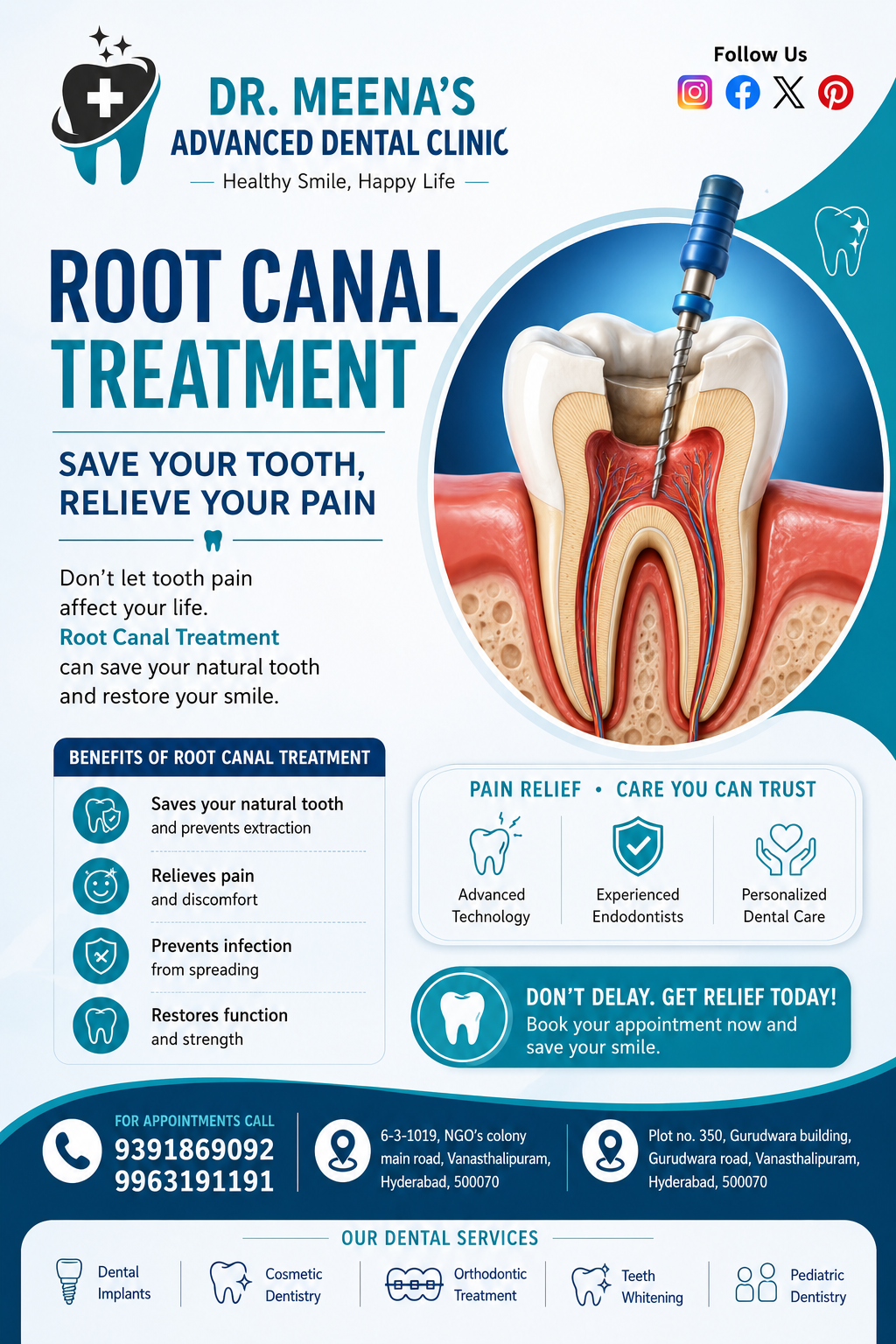
What Is a Root Canal and Its Cost and Treatment Absolutely. Below is a long-form, SEO-focused blog post written around your primary keyword “What Is a Root Canal and Its Cost and Treatment”, with natural use of local keywords for Vanasthalipuram, Hyderabad and your clinic name. What Is a Root Canal and Its Cost and Treatment? A Complete Guide A root canal is one of the most common dental procedures used to save a severely damaged or infected tooth. If you have persistent tooth pain, sensitivity to hot or cold foods, swelling, or pain while chewing, your dentist may recommend root canal treatment (RCT). But what exactly is a root canal? How is the treatment performed? Is it painful? And how much does a root canal cost in Vanasthalipuram, Hyderabad? In this guide, we explain everything you need to know about what a root canal is, its treatment procedure, cost, benefits, recovery, and when you may need one. What Is a Root Canal? A root canal treatment is a dental procedure performed to remove infected or damaged pulp from inside a tooth. Every tooth has a soft inner portion called the dental pulp, which contains nerves and blood vessels. When deep decay, cracks, trauma, or repeated dental procedures damage the pulp, bacteria can enter and cause an infection. During root canal treatment, the dentist: Examines the affected tooth. Removes the infected pulp. Cleans and disinfects the root canals. Fills and seals the canals. Restores the tooth, often with a dental crown. The main goal of root canal treatment is to remove infection and preserve your natural tooth rather than extracting it. Why Is Root Canal Treatment Needed? A root canal may be recommended when the pulp inside the tooth becomes infected or inflamed. Common causes include: Deep tooth decay Large or repeated fillings Cracked or fractured teeth Dental trauma or injury Untreated cavities Bacterial infection Wear or damage to the tooth If an infected tooth is left untreated, the infection can spread to the surrounding tissues and may eventually result in an abscess. What Are the Symptoms of a Tooth That Needs a Root Canal? Not everyone experiences the same symptoms. Some people may have severe pain, while others may have very few symptoms. Common signs include: Persistent toothache Severe pain while chewing Sensitivity to hot or cold foods Tooth discoloration Swelling around the gums Tenderness near the affected tooth A pimple or swelling on the gums Pain that spreads to the jaw, ear, or nearby teeth If you experience persistent tooth pain or swelling, it is important to consult a dentist for an examination. How Is Root Canal Treatment Done? Root canal treatment is generally completed in several stages. 1. Dental Examination Your dentist first examines the tooth and may recommend an X-ray to determine the extent of infection and understand the shape of the roots. 2. Local Anesthesia Local anesthesia is administered to numb the affected area. This helps make the procedure comfortable for the patient. 3. Removing the Infected Pulp The dentist creates a small opening in the tooth and carefully removes the infected or damaged pulp from the pulp chamber and root canals. 4. Cleaning and Disinfecting The canals are cleaned, shaped, and disinfected to remove bacteria and infected tissue. 5. Filling the Root Canals After cleaning, the canals are filled with a specialized dental material to seal them and reduce the risk of reinfection. 6. Restoring the Tooth After root canal treatment, the tooth may require a filling or dental crown, depending on how much tooth structure remains and which tooth has been treated. A crown can help protect a weakened tooth from fracture and restore its function. Is Root Canal Treatment Painful? One of the most common questions patients ask is, “Does a root canal hurt?” Modern root canal treatment is performed using local anesthesia, so most patients experience little or no pain during the procedure. You may experience some mild sensitivity or discomfort after treatment. This usually improves as the treated area heals. If you have significant or persistent pain after treatment, contact your dentist for an evaluation. How Much Does a Root Canal Cost in Vanasthalipuram? The root canal treatment cost in Vanasthalipuram, Hyderabad can vary depending on several factors. The cost may depend on: Type of tooth being treated Number of root canals Severity of infection Complexity of the procedure Type of filling material used Whether a dental crown is required Type of crown selected Additional dental procedures required Because every patient’s dental condition is different, the exact cost can only be determined after a dental examination. If you are searching online for root canal cost in Vanasthalipuram, it is better to ask your dentist for a complete treatment estimate rather than choosing a clinic based only on price. Root Canal Treatment Cost: What Influences the Price? Different teeth can require different levels of treatment. Front Teeth Front teeth generally have fewer canals and may have a relatively straightforward root canal procedure. Premolars Premolars can have one or more canals, so the complexity can vary. Molars Molars usually have multiple canals and can require more time and expertise, which may influence the overall treatment cost. Dental Crown A crown may be recommended after RCT, particularly for teeth that have lost significant structure. The type of crown selected can also affect the total treatment cost. Root Canal vs Tooth Extraction When a tooth is severely infected, patients may wonder whether it is better to undergo root canal treatment or have the tooth removed. Whenever a tooth can be predictably saved, preserving the natural tooth is generally preferable. Root Canal Treatment Preserves your natural tooth Restores chewing function Prevents the need for immediate tooth replacement Removes infection from inside the tooth Tooth Extraction Removes the infected tooth May require a replacement such as an implant, bridge, or denture Can involve additional treatment and expenses Your dentist can determine whether the tooth is suitable for root canal treatment based on its condition. Benefits
Dental Clinic In Vanasthalipuram For Root Canal Treatment
It can be convenient to choose a clinic that provides comprehensive dental services, including diagnosis, root canal treatment, restorative procedures, crowns, and preventive dental care. What Happens During Root Canal Treatment? The exact treatment process depends on the individual tooth, but a typical root canal procedure involves several steps. 1. Dental Examination The dentist examines the tooth and discusses your symptoms. An X-ray may be taken to understand the condition of the tooth and its roots. 2. Local Anaesthesia Local anaesthesia is generally used to numb the area around the tooth so that the procedure can be performed comfortably. 3. Cleaning the Root Canals The dentist accesses the inside of the tooth and removes the infected or inflamed pulp. The root canals are then cleaned and shaped. 4. Sealing the Tooth After the canals have been properly cleaned, they are filled and sealed to help prevent further infection. 5. Tooth Restoration Depending on the condition and location of the tooth, a filling or dental crown may be recommended to restore strength and function. Is Root Canal Treatment Painful? Modern dental techniques and local anaesthesia are designed to make root canal treatment much more comfortable than many people expect. Some tenderness or sensitivity can occur after treatment, but it is usually temporary. If you are worried about dental pain or treatment, discuss your concerns with your dentist before the procedure. Understanding what will happen can make the experience less stressful. How Long Does Root Canal Treatment Take? The time required for root canal treatment varies depending on factors such as the type of tooth, the number of canals, the severity of infection, and the complexity of the case. Some cases can be completed in fewer appointments, while more complicated cases may require additional visits. Your dentist can provide a more accurate treatment plan after examining your tooth. Benefits of Root Canal Treatment One of the major benefits of RCT is that it can help preserve the natural tooth. Potential benefits include: Helps eliminate infection inside the tooth Can relieve dental pain caused by pulp inflammation or infection Helps preserve the natural tooth Restores chewing function after proper restoration Can avoid extraction in suitable cases Root Canal Treatment vs. Tooth Extraction When a tooth is severely damaged or infected, patients may wonder whether extraction is better than root canal treatment. Whenever a tooth can be predictably restored, preserving the natural tooth may be preferable. However, extraction may be necessary in some situations when the tooth cannot be adequately restored. The best option depends on your individual dental condition. A dentist can explain the advantages and limitations of each treatment after examination. Why Timely Dental Treatment Matters Ignoring persistent tooth pain does not necessarily mean the problem will resolve on its own. Dental infections can progress and may lead to swelling or other complications. If you have ongoing tooth pain, sensitivity, or swelling, schedule a dental examination rather than delaying treatment. Looking for the Best Dentist for Root Canal Treatment in Vanasthalipuram? If you are searching for a best dentist for root canal treatment in Vanasthalipuram, focus on factors such as professional experience, diagnosis, treatment planning, technology, infection-control practices, patient communication, and follow-up care. A consultation allows the dentist to determine whether root canal treatment is appropriate for your tooth and whether additional restoration, such as a crown, is required. Frequently Asked Questions About Root Canal Treatment How do I know if I need a root canal? Symptoms such as persistent tooth pain, prolonged sensitivity, pain while chewing, swelling, or a damaged tooth can indicate a problem that requires dental evaluation. Only a dentist can determine whether RCT is necessary. Can a root canal save my natural tooth? In many suitable cases, root canal treatment can remove infection and allow the natural tooth to be retained. The long-term outcome also depends on the condition of the tooth and the quality of its final restoration. Do all toothaches require root canal treatment? No. Tooth pain can have many causes, including cavities, gum problems, sensitivity, cracks, and other dental conditions. A professional examination is necessary to identify the cause. Should I get a crown after root canal treatment? A crown may be recommended depending on the tooth’s location, remaining structure, and risk of fracture. Your dentist can advise whether a crown or another restoration is appropriate. How can I prevent the need for root canal treatment? Regular dental check-ups, good oral hygiene, limiting frequent sugary foods and drinks, treating cavities early, and protecting teeth from injury can help maintain oral health. Book a Dental Consultation in Vanasthalipuram If you are experiencing tooth pain, sensitivity, swelling, or discomfort while chewing, consider consulting a qualified dental professional. Early diagnosis can help identify the problem and determine the most suitable treatment. For patients searching for a dental clinic in Vanasthalipuram for root canal treatment, a professional dental consultation is the first step toward understanding your treatment options and protecting your oral health. contact us Fallow on Instagram
Best Dentist For Root Canal Treatment In Vanasthalipuram
Best Dentist for Root Canal Treatment in Vanasthalipuram – Dr. Meena’s Advanced Dental Clinic Are you experiencing persistent tooth pain, sensitivity to hot or cold foods, or discomfort while chewing? These symptoms may indicate an infection or damage inside your tooth that could require root canal treatment. Choosing the right dental professional is important for protecting your natural tooth and maintaining long-term oral health. If you are searching for the best dentist for root canal treatment in Vanasthalipuram, Dr. Meena’s Advanced Dental Clinic is a convenient option for patients looking for professional dental care in and around Vanasthalipuram, Hyderabad. What Is Root Canal Treatment? Root canal treatment, commonly called RCT, is a dental procedure used to treat a tooth when the soft tissue inside it, known as the dental pulp, becomes inflamed or infected. The pulp contains nerves and blood vessels. Deep tooth decay, cracks, fractures, or repeated dental procedures can allow bacteria to reach the pulp and cause infection. During root canal treatment, the dentist carefully removes the infected or damaged pulp, cleans and disinfects the root canals, and seals the tooth. Depending on the condition of the tooth, a dental crown may be recommended afterward to help restore its strength and function. When Do You Need a Root Canal? Not every toothache requires root canal treatment. However, certain symptoms may indicate that the tooth needs professional evaluation. Common warning signs include: Persistent or severe toothache Sensitivity to hot or cold foods and drinks Pain while biting or chewing Swelling around the tooth Tender or swollen gums A cracked or damaged tooth Darkening or discoloration of a tooth A recurring dental infection An abscess or pus near the tooth If you experience these symptoms, it is advisable to consult a dentist rather than delaying treatment. Why Choose a Dentist for Root Canal Treatment in Vanasthalipuram? When looking for a dentist, convenience is only one factor. A good dental clinic should provide proper diagnosis, suitable treatment planning, infection-control practices, and appropriate follow-up care. For residents of Vanasthalipuram, choosing a conveniently located dental clinic can make it easier to attend consultations, treatment appointments, and follow-up visits. Dr. Meena’s Advanced Dental Clinic provides dental care for patients from Vanasthalipuram and surrounding areas who are looking for treatment for tooth pain, dental decay, and root canal-related problems. Root Canal Treatment at Dr. Meena’s Advanced Dental Clinic At Dr. Meena’s Advanced Dental Clinic, patients can undergo a dental examination to determine the cause of their tooth pain or sensitivity. The dentist may evaluate the affected tooth and, when necessary, use dental X-rays or other diagnostic methods to understand the condition of the tooth and surrounding structures. A typical root canal treatment process may involve: 1. Dental Examination The dentist first examines the affected tooth and discusses your symptoms and dental history. 2. Diagnosis The condition of the tooth is assessed to determine whether root canal treatment is appropriate. 3. Cleaning the Root Canals If RCT is required, the infected or damaged pulp is removed and the root canals are cleaned. 4. Disinfection and Sealing The canals are carefully prepared, disinfected, and sealed to help prevent further infection. 5. Restoration Depending on the amount of tooth structure remaining, a filling or dental crown may be recommended to restore the tooth. Benefits of Root Canal Treatment Root canal treatment can offer several benefits when a tooth has an infected or inflamed pulp: Helps treat infection inside the tooth Can relieve pain caused by pulp inflammation or infection Helps preserve the natural tooth Restores the tooth’s ability to function Can help prevent the infection from spreading to surrounding tissues May avoid the need for extraction in suitable cases The best treatment option depends on the condition of your individual tooth, so a dental examination is important before deciding on treatment. Root Canal Treatment vs. Tooth Extraction When a tooth is severely damaged or infected, patients may wonder whether extraction is better than root canal treatment. Whenever a natural tooth can be predictably saved and restored, preserving it may have advantages. Root canal treatment aims to remove the infected pulp while retaining the natural tooth structure. Extraction removes the tooth completely and may require replacement with a dental implant, bridge, or another suitable restoration. Your dentist can evaluate the tooth and explain whether root canal treatment or extraction is appropriate for your particular situation. Is Root Canal Treatment Painful? Many patients are concerned about pain during root canal treatment. Modern dental techniques and local anesthesia are used to make the procedure more comfortable. The level of discomfort can vary depending on the severity of the infection, the condition of the tooth, and the individual’s sensitivity. After treatment, some temporary tenderness may occur. Your dentist can provide appropriate aftercare instructions based on your condition. How Long Does Root Canal Treatment Take? The duration of root canal treatment depends on several factors, including: Which tooth is being treated The number and shape of the root canals The severity of infection The condition of the tooth Whether additional procedures are required Some cases may be completed in a single appointment, while more complex cases may require additional visits. Your dentist can provide a more accurate treatment timeline after examining your tooth. Who May Need Root Canal Treatment? Root canal treatment may be recommended for people with: Deep dental cavities Dental infections Cracked or fractured teeth Significant tooth damage Repeated dental procedures on the same tooth Trauma affecting the tooth Irreversible inflammation of the dental pulp Early dental evaluation can help identify problems before they become more complicated. Dentist Near Vanasthalipuram and Nearby Areas If you live in or around Vanasthalipuram, finding a conveniently located dental clinic can make regular dental care easier. Patients searching for a dentist near Vanasthalipuram may also come from nearby areas such as: Hayathnagar BN Reddy Nagar Hastinapuram Mansoorabad LB Nagar Kothapet Chaitanyapuri Saroornagar Dilsukhnagar Nagole Uppal If you are experiencing tooth pain or symptoms of a dental infection, consider scheduling a dental examination rather than
Top Reasons to Get a Root Canal in Vanasthalipuram
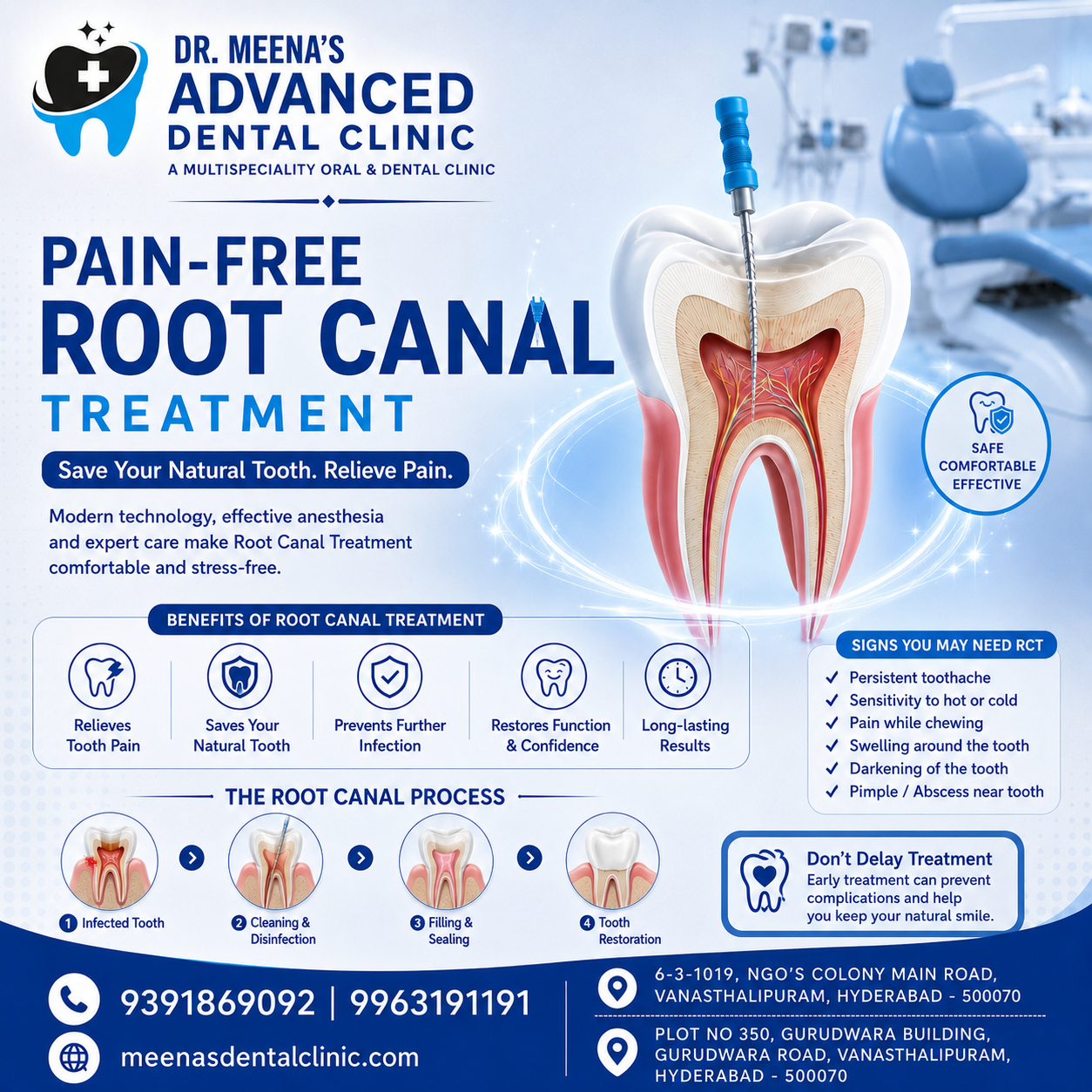
Top Reasons to Get a Root Canal in Vanasthalipuram Tooth pain can make eating, sleeping, and even everyday activities uncomfortable. While occasional sensitivity may have a simple cause, persistent toothache, swelling, sensitivity, or pain while chewing can indicate a deeper problem inside the tooth. A root canal treatment may be recommended when the soft tissue inside a tooth, known as the pulp, becomes inflamed or infected. Common causes include deep tooth decay, cracks or chips, repeated dental procedures, defective restorations, and dental trauma. If an infected or inflamed pulp is left untreated, the problem can progress to an abscess or other complications. If you are searching for Root Canal in Vanasthalipuram, understanding when RCT may be necessary can help you seek dental care at the right time. What Is a Root Canal Treatment? Root Canal Treatment (RCT) is a procedure designed to treat infection or inflammation inside a tooth. During the treatment, the dentist removes the inflamed or infected pulp, cleans and disinfects the root canals, shapes the canals, and then fills and seals them. The tooth is subsequently restored with an appropriate filling or crown depending on its condition. The main purpose is to treat the infection while preserving the natural tooth. 10 Top Reasons to Get a Root Canal in Vanasthalipuram 1. Severe or Persistent Tooth Pain One of the most common reasons people seek dental treatment is persistent tooth pain. If you experience severe pain while chewing or biting, throbbing toothache, or pain that continues without an obvious reason, the pulp inside the tooth may be inflamed or infected. Persistent dental pain should not be ignored. A dentist can examine the tooth and determine whether root canal treatment or another procedure is appropriate. 2. Deep Tooth Decay A small cavity may initially affect only the outer layers of the tooth. When decay progresses deeper, it can eventually reach the pulp. Once the pulp becomes infected or irreversibly inflamed, a root canal may be required to remove the affected tissue and save the tooth. Deep decay is one of the recognized reasons for root canal treatment. 3. Lingering Sensitivity to Hot or Cold Do you experience sharp or lingering pain after drinking something hot or cold? Temporary sensitivity can have several causes, but sensitivity that persists after the hot or cold stimulus is removed can indicate damage to the dental pulp and should be evaluated by a dentist. 4. Pain While Chewing or Biting Pain when biting down can sometimes be associated with decay, a damaged filling, a crack, or pulp damage. If chewing becomes uncomfortable or one particular tooth hurts whenever you bite, it is worth getting the tooth examined rather than continuing to chew on the opposite side. 5. Swelling or Tenderness Around the Tooth Swelling around a tooth or tenderness in the gums can be a sign of infection. A dental infection can sometimes develop into an abscess if left untreated. Prompt dental evaluation can help identify the source of the infection and determine the appropriate treatment. 6. Cracked or Chipped Tooth A cracked or chipped tooth can allow bacteria to reach deeper parts of the tooth. Depending on the location and severity of the damage, the pulp may become inflamed or infected. In such cases, root canal treatment may be recommended to treat the damaged pulp and preserve the tooth when possible. 7. Dental Injury or Trauma A tooth can suffer internal pulp damage after an accident, sports injury, fall, or other trauma. Importantly, pulp damage can occur even when there is no obvious crack or chip on the outside of the tooth. A dental examination is therefore important after significant tooth trauma. 8. Recurring Dental Problems After Previous Treatment A tooth that has already undergone dental treatment may sometimes develop new problems. Repeated dental procedures on the same tooth can be one reason the pulp becomes inflamed or infected. A dentist can assess the tooth and determine whether root canal treatment or another solution is needed. 9. Dental Abscess or Infection An abscess can develop when a bacterial infection spreads from an infected tooth into the surrounding tissues. Signs can include swelling, severe pain, tenderness, or a pimple-like bump on the gums. An abscess requires professional dental evaluation rather than simply treating the pain temporarily. 10. To Save Your Natural Tooth One of the biggest advantages of appropriate root canal treatment is that it can allow a natural tooth to be preserved. Rather than automatically removing an infected tooth, RCT can remove the infected pulp, clean the internal canals, seal the tooth, and allow it to continue functioning after proper restoration. Why Save Your Natural Tooth With RCT? Whenever clinically suitable, preserving the natural tooth can have important advantages. A successfully treated natural tooth can: Help maintain your natural smile Allow you to continue chewing normally Preserve the existing tooth structure Avoid extraction when the tooth can be saved Reduce the need for replacement of the missing tooth Help maintain normal dental function The American Association of Endodontists notes that properly treated teeth can often last for many years and, with appropriate care, may last a lifetime. Is Root Canal Treatment Painful? Many people delay RCT because they are afraid of pain. However, modern root canal treatment uses local anesthesia and contemporary techniques to make the procedure comfortable for most patients. Root canal treatment is often performed specifically to relieve the pain associated with an infected or inflamed tooth. Some sensitivity or soreness may occur for a few days afterward, particularly if the tooth was already painful or infected before treatment. If you are nervous about dental treatment, tell your dentist before the procedure so your concerns can be discussed. What Happens During a Root Canal? A typical root canal procedure involves several stages: Step 1: Dental Examination The dentist examines the tooth and may take dental X-rays to understand the condition of the tooth and surrounding structures. Step 2: Local Anesthesia The affected area is numbed to help make the
Painless RCT in Vanasthalipuram
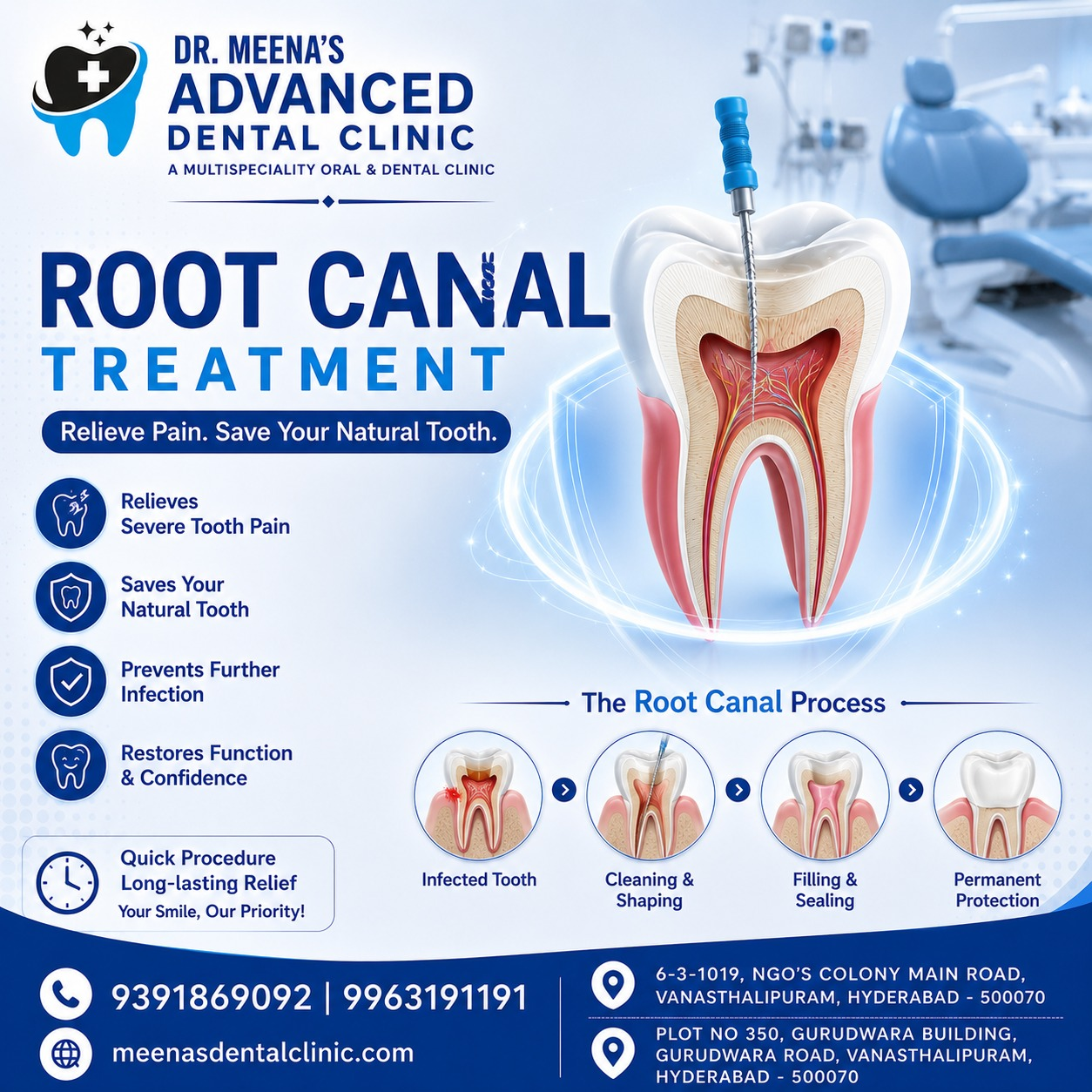
Painless RCT in Vanasthalipuram – Comfortable Root Canal Treatment for a Healthy Smile If you have been delaying a root canal because you are worried about pain, you are not alone. Many people still associate Root Canal Treatment (RCT) with discomfort. With modern dental techniques, local anesthesia, advanced equipment, and careful treatment planning, RCT can be performed comfortably with minimal discomfort. If you are looking for Painless RCT in Vanasthalipuram, choosing an experienced dentist can help make your root canal treatment a smoother and more comfortable experience. What Is Root Canal Treatment? Root Canal Treatment is a dental procedure used to treat an infected or severely damaged tooth. Inside every tooth is a soft tissue called the dental pulp, which contains nerves and blood vessels. When this pulp becomes infected because of deep decay, cracks, trauma, or repeated dental procedures, RCT may be recommended. During RCT, the infected pulp is carefully removed, the root canals are cleaned and disinfected, and the canals are sealed to help prevent further infection. The main goal is to save your natural tooth instead of extracting it. Is Root Canal Treatment Really Painless? Modern dentistry has made RCT much more comfortable than many people expect. Before beginning treatment, the dentist generally uses local anesthesia to numb the affected area. Patients may experience some pressure or vibration during the procedure, but sharp pain should not be expected when adequate anesthesia is achieved. After treatment, mild sensitivity or soreness may occur for a few days, particularly when biting. This usually settles as the surrounding tissues recover. Why Choose Painless RCT in Vanasthalipuram? Choosing a dental clinic close to home can make appointments and follow-up visits easier. If you live in Vanasthalipuram or nearby areas, getting your root canal treatment locally can be convenient. A comfortable RCT experience may include: Careful examination and diagnosis Digital dental imaging when required Effective local anesthesia Gentle and minimally invasive techniques Thorough cleaning and disinfection of root canals Proper sealing of the treated tooth Guidance for post-treatment care Follow-up evaluation when required Signs You May Need Root Canal Treatment You should consult a dentist if you experience symptoms such as: Persistent toothache Severe sensitivity to hot or cold Pain while chewing or biting Swelling around the tooth A recurring dental abscess Darkening or discoloration of a tooth A broken or cracked tooth Pain that continues even after the original trigger is removed Sometimes an infected tooth may not cause significant pain. Regular dental examinations can help identify dental problems before they become more serious. How Does a Painless RCT Work? A typical root canal procedure involves several stages: 1. Dental Examination The dentist examines the affected tooth and may recommend an X-ray or other imaging to understand the condition of the tooth and surrounding structures. 2. Local Anesthesia The treatment area is numbed using local anesthesia to help ensure a comfortable procedure. 3. Removal of Infection The dentist accesses the inside of the tooth and carefully removes infected or damaged pulp tissue. 4. Cleaning and Disinfection The root canals are cleaned and shaped to remove bacteria and infected material. 5. Sealing the Canals After cleaning, the canals are filled and sealed to reduce the risk of reinfection. 6. Tooth Restoration Depending on the condition of the tooth, a filling or dental crown may be recommended to restore its strength and function. Benefits of Painless Root Canal Treatment Choosing timely RCT can provide several benefits: Helps preserve your natural tooth Treats infection inside the tooth Helps relieve toothache caused by pulp infection Restores normal chewing function Reduces the risk of the infection spreading Can help avoid tooth extraction in suitable cases Why Should You Not Delay RCT? Ignoring a tooth that requires root canal treatment may allow infection to progress. What begins as tooth sensitivity or occasional pain can develop into a more serious dental infection. Early dental evaluation can help determine whether RCT is necessary and what treatment is most appropriate for your tooth. How to Prepare for a Comfortable RCT If you are nervous about root canal treatment, tell your dentist about your concerns before the procedure. Understanding the treatment process can help reduce anxiety. You can also: Eat normally unless your dentist gives different instructions Inform your dentist about your medications and allergies Follow pre-treatment instructions carefully Ask questions about the procedure Follow the recommended aftercare instructions Find Comfortable Root Canal Treatment in Vanasthalipuram If tooth pain, sensitivity, or swelling is affecting your daily life, don’t wait for the symptoms to become severe. A dental examination can help identify the cause and determine whether root canal treatment is required. For people searching for Painless RCT in Vanasthalipuram, modern root canal treatment can offer a comfortable way to treat an infected tooth while preserving your natural smile. Book a dental consultation and discuss your symptoms with an experienced dentist to determine the right treatment for your tooth. Frequently Asked Questions About Painless RCT in Vanasthalipuram 1. Is RCT painful? With modern local anesthesia and proper dental techniques, root canal treatment is generally performed comfortably. You may feel pressure or vibration during the procedure, but significant pain should be minimized. 2. How long does a root canal take? The duration depends on the tooth, the extent of infection, and the complexity of the root canals. Some cases can be completed in one appointment, while others may require multiple visits. 3. How many visits are required for RCT? The number of appointments depends on the condition of the tooth and the treatment plan recommended by your dentist. Some root canal cases can be completed in a single visit, while complex cases may require additional appointments. 4. Will my tooth hurt after RCT? Some mild soreness or sensitivity can occur after treatment. This generally improves over the following days. Contact your dentist if you experience severe or persistent pain. 5. Can RCT save my natural tooth? In many suitable cases, RCT can remove the infection and allow the natural tooth to be preserved
Root Canal Treatment Cost in Vanasthalipuram
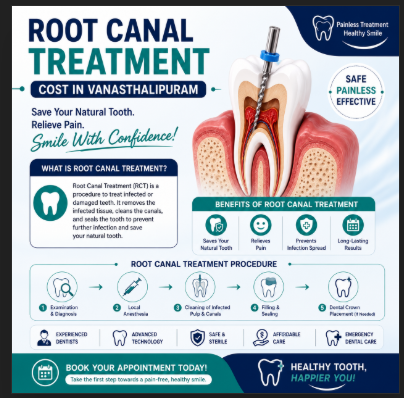
Root Canal Treatment Cost in Vanasthalipuram: Everything You Need to Know Dental pain can significantly affect your quality of life, making simple activities like eating, speaking, and sleeping uncomfortable. When a tooth becomes severely infected or damaged, root canal treatment is often the best option to save the natural tooth and restore oral health. Understanding the root canal treatment cost in Vanasthalipuram can help you make informed decisions about your dental care. This guide covers the treatment process, factors affecting cost, benefits, and frequently asked questions. What is Root Canal Treatment? Root Canal Treatment (RCT) is a specialized dental procedure used to treat infection or damage within the pulp of a tooth. The pulp contains nerves and blood vessels that can become infected due to deep cavities, cracks, trauma, or repeated dental procedures. During the treatment, the infected pulp is removed, the canals are thoroughly cleaned and disinfected, and the tooth is sealed to prevent future infection. When Do You Need a Root Canal Treatment? You may require root canal treatment if you experience: Persistent tooth pain Sensitivity to hot or cold foods and beverages Swollen or tender gums Tooth discoloration Pain while chewing or biting Deep decay reaching the tooth pulp Dental abscess or infection Seeking treatment early can help prevent complications and tooth loss. Factors Affecting Root Canal Treatment Cost in Vanasthalipuram Several factors influence the overall cost of root canal treatment: 1. Type of Tooth Front teeth generally have fewer canals and may require less treatment time than premolars and molars. 2. Severity of Infection Advanced infections may require additional procedures and multiple visits. 3. Number of Root Canals Teeth with multiple canals require more extensive cleaning and filling procedures. 4. Dental Technology Used Clinics using advanced equipment such as digital X-rays and rotary endodontics often provide more precise and efficient treatment. 5. Need for a Dental Crown A dental crown may be recommended after treatment to strengthen and protect the tooth. 6. Dentist’s Experience Experienced dentists and endodontists provide high-quality treatment and long-lasting results. Benefits of Root Canal Treatment Saves Your Natural Tooth Root canal treatment preserves your natural tooth structure and avoids extraction. Relieves Pain and Discomfort The procedure removes infection and eliminates the source of pain. Prevents Infection Spread Treating the affected tooth helps stop bacteria from spreading to surrounding tissues. Restores Normal Function A treated tooth can continue functioning normally for chewing and speaking. Long-Term Solution With proper care, a root canal-treated tooth can last for many years. Root Canal Treatment Procedure Step 1: Dental Examination The dentist evaluates the affected tooth and may take digital X-rays. Step 2: Local Anesthesia The treatment area is numbed to ensure patient comfort. Step 3: Removal of Infected Pulp The infected pulp tissue is carefully removed. Step 4: Cleaning and Shaping The root canals are cleaned, disinfected, and shaped. Step 5: Filling and Sealing The canals are filled with a biocompatible material and sealed. Step 6: Crown Placement A dental crown may be placed to strengthen the treated tooth. Is Root Canal Treatment Painful? Modern root canal treatment is designed to be comfortable and virtually painless. Advanced anesthesia techniques and modern dental equipment help ensure a smooth treatment experience. Most patients report immediate relief from the pain caused by infection after treatment. Why Choose a Trusted Dental Clinic in Vanasthalipuram? Choosing the right dental clinic is important for successful treatment outcomes. Look for: Experienced dentists and endodontists Advanced dental technology Strict sterilization protocols Transparent treatment planning Positive patient reviews Personalized patient care A trusted dental clinic can help ensure safe, effective, and long-lasting treatment. Tips to Maintain Your Teeth After Root Canal Treatment Brush twice daily Floss regularly Avoid chewing hard objects Visit your dentist for regular checkups Maintain good oral hygiene habits Wear a mouthguard if you grind your teeth Proper care helps protect your treated tooth and maintain long-term oral health. Frequently Asked Questions (FAQs) 1. How long does root canal treatment take? Most root canal treatments are completed within one or two appointments, depending on the complexity of the case. 2. Is root canal treatment safe? Yes. Root canal treatment is a safe and commonly performed procedure that helps save natural teeth. 3. Do I need a crown after root canal treatment? In many cases, especially for molars, a dental crown is recommended to protect the treated tooth. 4. Can a root canal-treated tooth last a lifetime? With proper oral hygiene and regular dental visits, a treated tooth can last for many years and sometimes a lifetime. 5. What happens if I delay treatment? Delaying treatment can lead to worsening infection, severe pain, abscess formation, and potential tooth loss. 6. Can I eat after a root canal procedure? Yes, but it is generally recommended to wait until the numbness wears off and avoid hard foods temporarily. 7. How can I prevent future root canal treatments? Maintaining good oral hygiene, treating cavities early, and attending regular dental checkups can help prevent severe infections. 8. Is root canal treatment better than tooth extraction? In most cases, preserving your natural tooth through root canal treatment is preferable to extraction whenever possible. Final Thoughts Root canal treatment is an effective way to save infected teeth, relieve pain, and restore oral health. Understanding the factors that influence root canal treatment cost in Vanasthalipuram can help you make informed decisions and choose the right dental care provider. If you are experiencing tooth pain or signs of infection, consult an experienced dentist promptly to protect your smile and overall dental health. Book your dental consultation today and take the first step toward a healthier, pain-free smile.Locate us on map
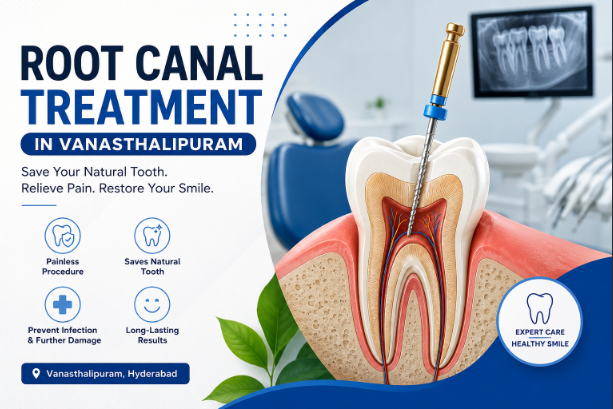
Root Canal Treatment in Vanasthalipuram
Root Canal Treatment in Vanasthalipuram: Everything You Need to Know Tooth pain can disrupt your daily life, making eating, speaking, and even sleeping uncomfortable. If you are experiencing severe tooth sensitivity or persistent dental pain, a root canal treatment may be the best solution. Fortunately, getting a painless and effective root canal treatment in Vanasthalipuram is now easier with advanced dental technology and experienced dentists. In this guide, we’ll explain what root canal treatment is, when you need it, its benefits, procedure, and how to choose the right dental clinic in Vanasthalipuram. What is Root Canal Treatment? Root canal treatment (RCT) is a dental procedure used to save an infected or damaged tooth. Inside every tooth is a soft tissue called pulp, which contains nerves and blood vessels. When the pulp becomes infected due to deep decay, cracks, or injury, it can cause intense pain and swelling. During the procedure, the infected pulp is removed, the root canals are cleaned and disinfected, and the tooth is sealed to prevent future infection. Signs You May Need a Root Canal Treatment You may require root canal treatment if you experience: Severe toothache while chewing Sensitivity to hot or cold foods Swollen or tender gums Darkening of the tooth Persistent pimples on the gums Cracked or chipped tooth with pain Ignoring these symptoms can lead to severe infection and tooth loss. Benefits of Root Canal Treatment 1. Saves Your Natural Tooth Root canal treatment helps preserve your original tooth structure instead of removing the tooth completely. 2. Relieves Pain Modern dental techniques make root canal treatment virtually painless while eliminating the source of infection. 3. Prevents Infection Spread Treating the infected tooth early prevents bacteria from spreading to surrounding teeth and gums. 4. Improves Oral Health A treated tooth can function normally for many years with proper care. Root Canal Treatment Procedure Step 1: Diagnosis and X-Ray The dentist examines the tooth and takes X-rays to determine the extent of infection. Step 2: Local Anesthesia The area is numbed to ensure a painless procedure. Step 3: Cleaning the Infected Pulp The infected pulp is removed, and the canals are cleaned thoroughly. Step 4: Filling and Sealing The canals are filled with a special material and sealed. Step 5: Dental Crown Placement In many cases, a dental crown is placed to protect and strengthen the tooth. Is Root Canal Treatment Painful? One of the biggest myths about root canal treatment is that it is painful. With modern anesthesia and advanced dental equipment, the procedure is usually comfortable and pain-free. In fact, root canal treatment helps eliminate the severe pain caused by infection. Cost of Root Canal Treatment in Vanasthalipuram The cost of root canal treatment in Vanasthalipuram depends on several factors, including: Tooth condition Number of canals Need for a dental crown Dentist’s experience Technology used Most dental clinics offer affordable treatment plans and flexible payment options. How to Choose the Best Dental Clinic in Vanasthalipuram When selecting a clinic for root canal treatment, consider: Experienced endodontists Modern dental equipment Sterilization standards Patient reviews and testimonials Transparent pricing Emergency dental care availability Choosing a trusted dental clinic ensures safe, painless, and long-lasting treatment. Tips to Maintain Your Teeth After Root Canal Treatment Brush twice daily Floss regularly Avoid biting hard foods Visit your dentist for regular checkups Maintain good oral hygiene Proper care can help your treated tooth last for many years. Final Thoughts If you are suffering from tooth pain or sensitivity, don’t delay treatment. A timely root canal treatment in Vanasthalipuram can save your natural tooth, relieve pain, and restore your smile. Consult an experienced dentist to receive accurate diagnosis and advanced dental care tailored to your needs. Book your dental consultation today and take the first step toward a healthy, pain-free smile. Locate us on google maps